


专利、商标和外观设计
我们帮助各种形式和规模的个人和企业
施利希是一个独特的欧洲专利和商标律师团队,总部位于英格兰南部。自2004年以来,我们帮助客户收购和保护他们的知识产权资产,帮助他们在知识产权资产的基础上建立和发展成功的企业。
我们起草和提交专利申请,使其获得批准并实施强制执行。我们还准备和提交商标申请,并为其注册进行起诉。
T为了执行客户的权利,我们还代表他们参加法院和其他各方之间的诉讼程序(必要时,提出异议和撤销竞争对手的权利)。
近期案例解析
阅读施利希团队关于涉及专利、商标和外观设计的近期真实案例解析和新闻动态。

When “Monotherapy” Means Monotherapy: A Cautionary Tale on Claim Interpretation and Added Matter at the EPO
In this recent EPO Board of Appeal (BoA) decision, the claims of European patent No. 3288980 were found to lack basis in the application as filed as a result of the BoA’s reluctance to accept a bespoke meaning of the term “monotherapy” advanced by the patentee. The decision serves as a useful reminder that non-standard definitions must be clear, consistent and reflected in the claim language itself, particularly as questions around claim interpretation and added matter remain under close scrutiny while we await the outcome of G 1/26.


Has the EPO TBA Demolished the Essentiality Test?
EPO TBA decision T 0417/25 (Remote-controlled demolition robot/Husqvarna), illustrates again that, when assessing amendments for addition of matter, the EPO’s approach is ever stricter.

A Clear Way Forward for Description Amendments: Decision Issued in G 1/25
The Enlarged Board of Appeal of the EPO has decided in G 1/25 that claim interpretation requires the specification to be read as a unitary process, endorsing the decision in T 439/22 and potentially ending the debate about what it means to ‘consult’ the description. The decision also confirms the EPO can only require description amendments where these are necessary to ensure compliance with certain articles of the EPC.

UPC Considers Intermediate Generalizations
The UPC Court of Appeal has recently issued its decision on SiBio Technology Limited vs Abbott Diabetes Care Inc., providing important guidance with regards to added matter. This is a further example of the UPC developing its own approach to application of the European Patent Convention (EPC).

Copyright Infringement in the Digital Age: Guidance from the CJEU on How to Find Your Way Through
The international nature of the internet can make it challenging to avoid infringing copyright in certain countries when publishing something online. However, a recent decision of the CJEU suggests effective geo-blocking measures might help website operators avoid getting caught out.
What Makes a 3D trade mark functional? The General Court Has an Answer
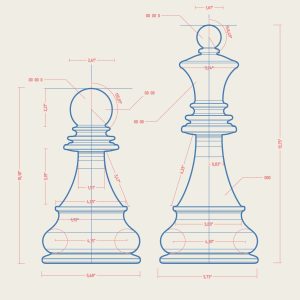
The EU General Court in T‑104/25 has annulled a Board of Appeal’s decision upholding the validity of a registered 3D trade mark for the shape of a carton container. The Court found that the Board failed to properly consider the technical results arising from the use of the 3D mark, emphasizing that the functionality assessment must focus on functional results arising when the product reaches the user. The decision serves as a useful reminder that when assessing technical results of a 3D shape mark it is necessary to consider whether the shape performs a technical function when the product is in use.

US Supreme Court Finds that Induced Infringement Requires More Than a Skinny Label
Following our earlier article, the US Supreme Court has now provided its Decision in this matter.

Formulation PTEs on the chopping block down under
Australia’s High Court is now considering a patent term extension issue with major implications for pharmaceutical formulation patents.
在专利和商标法方面的卓越表现
施利希团队
由于施利希经验丰富的专业团队,我们的客户获得了超越期望值的迅速回馈,高质量和高价值的友好服务。我们的英国和欧洲专利律师以及特许商标律师,拥有英国顶尖大学的广泛科学和技术专业学位和博士学位,并在法律和商业问题及技术的最前沿拥有几十年的咨询经验。
我们在起诉和跨部门诉讼方面积累了深厚的经验,为客户的创新成果提供最佳的战略和实践建议,并确保最佳的专利和商标保护。我们的团队在更多高技能和经验丰富的法律支持人员团队的支持下,以友好和明确的方式高效地完成了每项诉讼事务。

最近公司动态
Schlich listed as one of Financial Times’ Leading Patent Law Firms in Europe for 2026
We are delighted to report that Schlich has, once again, been included in the Financial Time’s Europe’s Leading Patent Law Firms rankings for 2026.

Schlich recognised in IAM Patent 1000 rankings for 2026
We are pleased to announce that Schlich has once again been recognised in the IAM Patent 1000 rankings, for patent prosecution in the United Kingdom.
Schlich’s Reception Aboard the Golden Hinde
On Sunday, 3 May 2026 we were delighted to host our 2026 Schlich Reception, welcoming our clients, colleagues and friends from all around the world to London.


