
 August 2026
 The EU General Court in T‑104/25 has annulled a Board of Appeal’s decision upholding the validity of a registered 3D trade mark for the shape of a carton container. The Court found that the Board failed to properly consider the technical results arising from the use of the 3D mark, emphasizing that the functionality assessment must focus on functional results arising when the product reaches the user. The decision serves as a useful reminder that when assessing technical results of a 3D shape mark it is necessary to consider whether the shape performs a technical function when the product is in use.
The case had already been through several stages of proceedings. At the first instance, the trade mark was declared invalid on the basis that it provided a technical result. The proprietor appealed that decision to the Board of Appeal, where it was concluded that, as the shape primarily provided advantages in the manufacturing process rather than affecting how the product functioned when used by the consumers, the functional exclusion does not apply. Consequently, the matter was then appealed to the General Court.
Essential characteristics of the mark
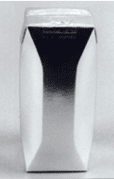
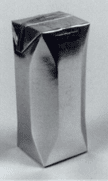
Before assessing functionality, the Court first had to identify the essential characteristics of the registered mark. As these characteristics had already been identified by the Board of Appeal and were not contested by the parties, the Court adopted the same list:
- An octagonal brick shape;
- Hexagonal concave corner panels;
- Side panels that narrow in the middle; and
- A sealing fin at the top.
Technical results arising during the manufacturing process
One of the previously considered issues was whether the “technical result” includes advantages arising during the manufacturing process. The General Court held that it does not.
According to the Court, manufacturing advantages are not relevant for the registrability assessment because consumers do not care how a product is produced. The court also noted that the purpose of the exclusion provision is to prevent monopolies over technical features arising from the use of the product. Having established these principles, the Court held that the only relevant technical results are those that arise during the use of the product.
Technical results arising during the use of the product
The Opponent argued that all of the identified essential characteristics of the mark provided technical results during the use of the product. According to the Opponent, the 3D shape improves the container’s ability to hold liquids and food products, uses less material while maintaining capacity, creates lighter and less bulky packaging, improves stability and rigidity, facilitates storage and stacking, and makes the container easier to handle.
The trade mark proprietor disagreed. It argued that any advantages arising from reduced material usage, weight reduction or sustainability related primarily to manufacturing efficiency and therefore should not be regarded as technical results of the product itself. The proprietor also submitted that stability and ease of handling are ordinary characteristics expected from any packaging and should not be considered. In its view, these features were aesthetic design choices rather than technical considerations.
The General Court’s Decision
In response, the General Court emphasized two key principles. First, a shape does not need to be the only way of achieving a technical result to be excluded. Secondly, the existence of alternative designs is irrelevant and the question is whether the specific shape performs a technical function.
In view of this, the Court held that the container’s essential characteristics directly affect the product’s use. In particular, the carton shape enables it to hold liquids and food products, ensures airtight closure, provides stability, facilitates handling and stacking, reduces weight, and makes the package easier to grip.
The court stated that technical result does not have to be innovative or superior and that it is irrelevant whether other shapes can achieve the same technical result, as the question is whether a shape in question performs a technical function, not whether alternatives exist. Lastly, the proprietor’s argument that the design is aesthetic was not considered because a feature can have both an aesthetic value and a technical function.
This led the Court to conclude that the Board of Appeal made a legal error and its decision was therefore annulled.
Conclusion
The decision is a useful reminder that trade mark protection is not always available for product shapes, even where they are distinctive – if a shape helps a product perform its function, it may fall within the functionality exclusion regardless of its appearance